
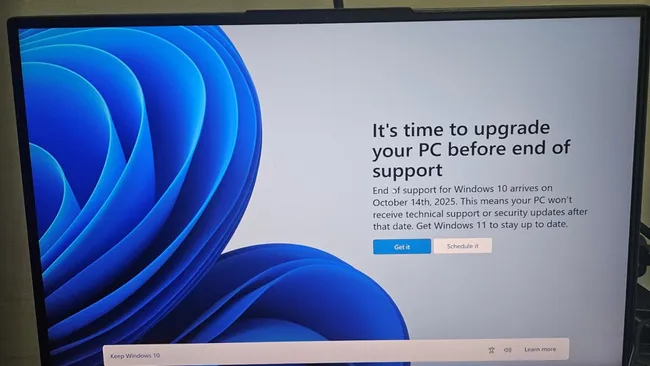

Despite the official end of free support for many versions of Windows 10, recent statistics indicate that Windows 11 has not yet fully displaced it. As of November 2025, data from analytics firm Statcounter shows Windows 11 running on 53.7% of active Windows desktops, while Windows 10 still drives 42.7%.
The modest shift reflects both consumer and enterprise behavior. Many businesses have opted for paid Extended Security Updates rather than migrating to Windows 11 — a strategic decision driven by concerns around hardware compatibility, legacy applications, and the operational costs of upgrading entire device fleets.
On the consumer side, a significant portion of users continue to keep older PCs with Windows 10 active for secondary or light-duty tasks — backups, file storage, or simple productivity work — effectively maintaining Windows 10’s footprint in public usage data.
Overall, the data suggests that while Windows 11 is gradually gaining ground, its growth is being propelled more by new device purchases than by replacement of aging Windows 10 systems — meaning Windows 10’s prevalence remains “mind-bogglingly” high for now.
