
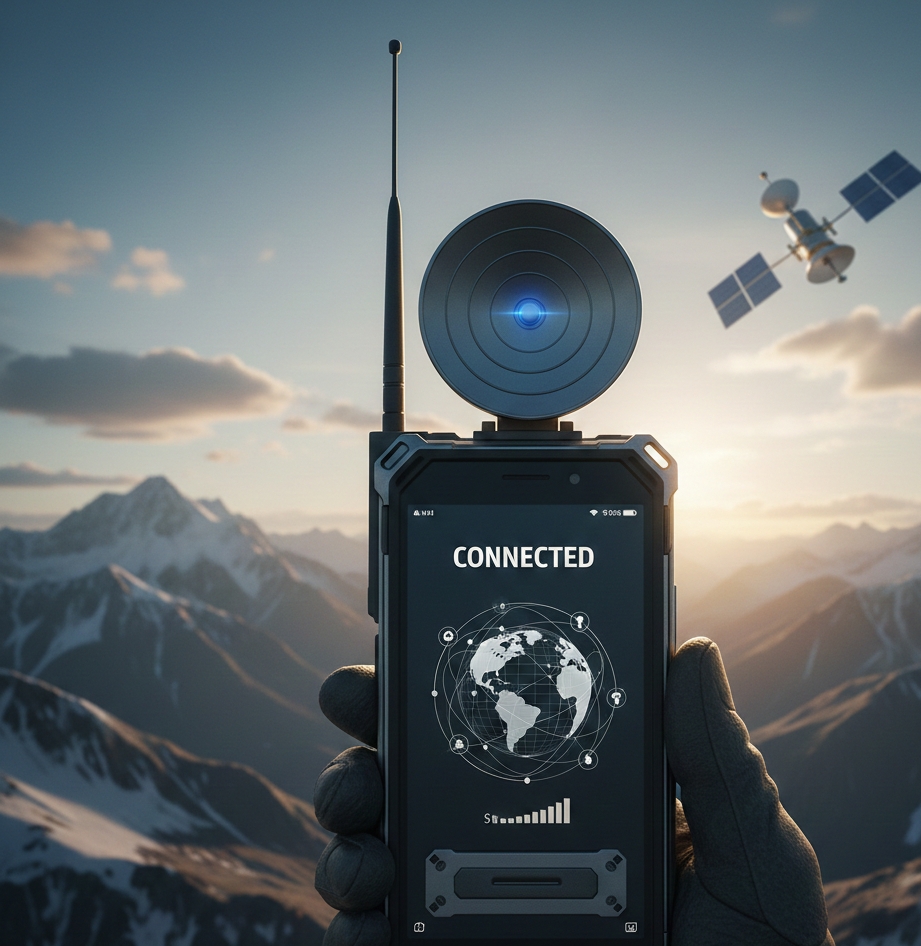

Satellite-connected smartphones are quickly emerging as a revolutionary technology, offering mobile connectivity in areas where traditional cellular networks are unavailable. Unlike standard phones that rely on towers, these devices communicate directly with satellites orbiting the Earth, providing coverage in remote regions, during natural disasters, or at sea.
Recent advancements have made satellite communication more accessible to consumers. Phones equipped with satellite antennas can now send texts, emergency alerts, and even low-bandwidth data without relying on Wi-Fi or cellular networks. Companies like Apple, Samsung, and Garmin have already integrated satellite-based SOS and messaging features, while others are exploring full satellite broadband services for mobile devices.
The primary use cases for satellite-connected phones are clear. Adventurers, hikers, sailors, and residents in rural or mountainous regions gain reliable communication when traditional networks fail. Additionally, satellite connectivity is becoming critical for emergency preparedness — users can contact authorities during natural disasters when cell towers are down.
However, this technology is not without limitations. Satellite communication can be slower than standard mobile networks, and coverage can vary depending on satellite constellations and device positioning. There is also a cost factor: satellite-enabled phones and service plans tend to be more expensive than conventional devices.
For consumers considering a satellite-connected smartphone, the decision depends on lifestyle and location. Urban users may rarely need satellite functionality, but for those living or traveling in off-grid areas, these devices represent a lifeline. As satellite technology continues to improve, we can expect broader adoption, lower costs, and even more advanced services integrated into mainstream smartphones.
The future of mobile connectivity is expanding beyond towers and cables, and satellite-enabled phones are leading the charge toward truly global communication.
