
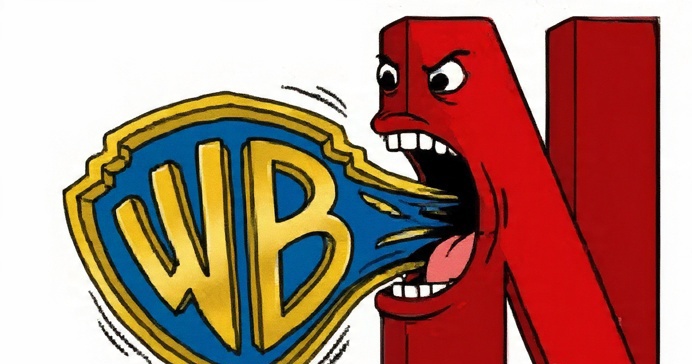

In December 2025, Netflix announced it would acquire Warner Bros. — including its studios, film & television production, and streaming assets such as HBO Max and HBO — in a deal valued at US$82.7 billion. The transaction is set to finalize once Warner Bros.’ linear TV networks (cable channels) are spun off into a separate publicly traded entity, with closure expected around Q3 2026.
This merger represents one of the largest shake-ups in entertainment history — and has already sparked a wave of debate, concern, and speculation across Hollywood, from studios to unions, from theaters to streaming platforms.
What the Deal Means: More Content, Bigger Library, Brand Power
By acquiring Warner Bros., Netflix gains access to decades — even a century — of content: classic films, acclaimed TV shows, and franchises with huge cultural and financial weight. This includes not only beloved titles and series, but also major intellectual property (IP) such as from the DC Comics universe, among others.
From Netflix’s perspective, the acquisition is pitched as a way to “entertain the world” on an even grander scale: combining Warner’s storied legacy and production capacity with Netflix’s global reach and streaming-first business model.
Netflix claims the merger will deliver benefits such as:
A vastly expanded catalog of movies and shows, giving subscribers more variety and access.
Enhanced production capacity and resources, enabling more content creation and—potentially—investment in new series and films.
Stronger competitive positioning: Netflix becomes a hybrid of streaming platform + legacy studio + production powerhouse, potentially unlocking economies of scale and creative opportunities.
For many viewers, this could mean access to a “one-stop entertainment destination”: the convenience of streaming plus the depth of decades of film and TV heritage.
Why Hollywood Is Alarmed: Consolidation, Risk to Diversity, Threat to Theaters
But this massive consolidation has triggered strong resistance across the entertainment industry — from unions, studios, theaters, and even lawmakers. Critics warn that the deal could dramatically harm competition, creative diversity, and the theatrical-film business model.
Union and Creative Industry Concerns
The Writers Guild of America (WGA) publicly urged regulators to block the merger, warning that it could “eliminate jobs, push down wages, worsen conditions for all entertainment workers, raise prices for consumers, and reduce the volume and diversity of content.”
Other major guilds and unions — including actors and directors unions — expressed serious concern, noting that fewer studios and buyers could mean fewer projects, less bargaining power, and increased risk for creative workers.
Threat to Theaters and Theatrical Releases
One of the biggest worries: the potential decline of theatrical releases. Traditional movie theaters — already hurt by streaming competition and, earlier, by the pandemic — fear the deal could deal a “death blow” to theatrical filmmaking.
While Netflix has pledged to “maintain” theatrical releases for now, including continuing Warner Bros.’ planned films in theaters, the company also signaled that release “windows” (time between theatrical release and streaming availability) may shrink moving forward — a move viewed by many as undermining the traditional cinema model.
Smaller studios, independent producers, and cinema chains worry that a consolidated behemoth like Netflix + Warner could dominate the content funnel — leaving little room for mid-budget or niche films, indie productions, and creative risks.
The Regulatory and Antitrust Question — Major Hurdles Ahead
Given the scale of this merger, regulators in the US and abroad are expected to scrutinize the deal heavily. Critics — including politicians and antitrust advocates — argue that combining two of the largest players in content production and distribution could create a near-monopoly, reduce market competition, and harm consumers in the long run.
As one prominent voice warned: this deal may be exactly what antitrust laws were designed to prevent — a dominant platform absorbing a key competitor and consolidating control over both content creation and its distribution.
If regulators block the acquisition, there is a substantial breakup fee built in. But if approved, the combined Netflix-Warner entity could reshape global entertainment for decades.
What It All Means — A Crossroads for Hollywood
The Netflix-Warner deal isn’t just a business transaction. It’s a turning point for how content is created, distributed, consumed — and who holds the power.
On one side: potential benefits for audiences — a massive library, convenience, perhaps more content output. On the other side: risk of shrinking creative diversity, fewer opportunities for smaller players, undermined theatrical film culture, and a media landscape dominated by a single giant.
For creators, artists, and workers in film and TV — this could mean fewer studios to pitch to, tougher competition for projects, and reduced bargaining power. For cinemas, indie filmmakers, and fans of niche or experimental films — there is real uncertainty. And for regulators, business leaders, and consumers, a critical question emerges: does convenience justify consolidation — or is diversity and competition worth more?
The next 12–18 months — as studios spin off networks, regulators weigh approval, and Netflix begins integrating Warner’s operations — could determine whether this merger becomes the new norm for global entertainment — or a cautionary tale on the cost of consolidation.
