
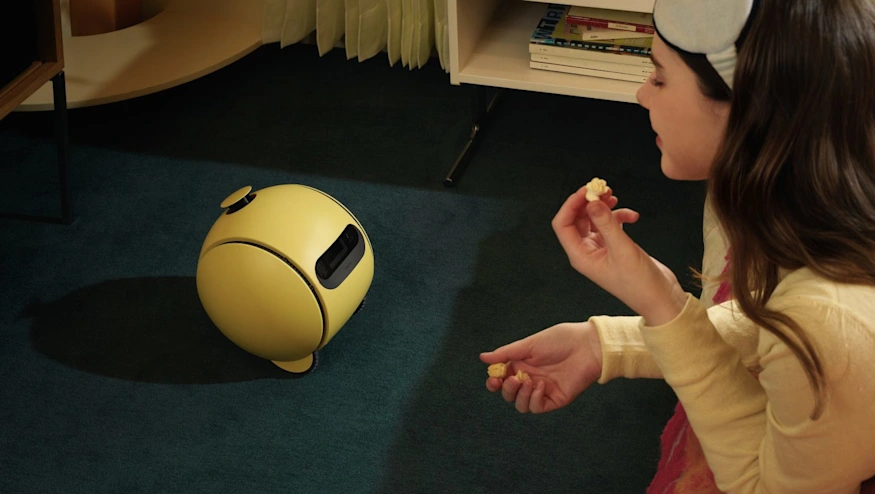

Samsung’s Ballie was introduced to the world as a futuristic rolling AI companion that would roam the home, project visuals on walls, assist with smart-home controls and act as a more personal version of a voice assistant. It was first unveiled in 2020 and resurfaced repeatedly at CES show events, most notably at CES 2024 with a major redesign and stronger AI projection capabilities. Yet years later, consumers still have no retail device, no confirmed release date and no solid purchase window. This ongoing absence is the core frustration highlighted in the Engadget post questioning the long-delayed product.
Samsung’s demonstration of Ballie captured attention because it represented something more ambitious than a standard smart speaker. The robot was shown to follow owners autonomously, map interior spaces, interact with devices through SmartThings, and even project movies, video calls or fitness visuals directly on walls or surfaces. Such a device promises to merge AI assistance, automation, mobility and entertainment in a single machine — but ambition alone is not the same as availability, and this is where Ballie continues to fall short.
Despite multiple showcases and public excitement, Samsung has still not delivered Ballie to consumers. Even after expectations of release in 2024 and a renewed suggestion of progress into 2025, there remains no confirmed retail launch. Engadget’s question — “Where the hell is Ballie?” — reflects the tech community’s growing impatience and doubt about whether the robot is truly near completion or still an ongoing experimental project. Each year brings another appearance, another teaser and yet another cycle of anticipation that ends without product availability.
The unanswered gap between presentation and reality suggests one likely truth: Ballie may be more technically difficult to deploy at scale than Samsung anticipated. A mobile AI robot requires reliable navigation, safe movement around pets and humans, strong voice understanding, and projection capabilities that work in dynamic real-world environments. These layers of complexity make it far more challenging than a smart speaker or screen-based assistant, and this could explain why Samsung continues to delay it instead of releasing an unfinished or underperforming device.
Until Samsung confirms a launch date with pricing and region distribution, Ballie remains a concept rather than a product. The world has seen it on stages, in promotional videos, in controlled demos, yet not in homes. The question asked by Engadget perfectly captures the moment — we know what Ballie could be, but we do not know when or if it will actually arrive. For now, Ballie exists more as an idea of the smart-home future than a device customers can buy today, and unless Samsung breaks its silence with concrete details, skepticism will only continue to grow.
